



Today, I want to talk about a key LLM mechanism that directly impacts visibility.
Large language models like Gemini, ChatGPT, and Claude do not surface content randomly. They understand what a user is trying to achieve by evaluating intent, context, and user characteristics in real time, then determine which information is most relevant for that specific user. This shift fundamentally changes how online visibility works. Defining your target customer is no longer just a marketing exercise. It is now a structural requirement for being surfaced by AI-driven systems.
As search behavior continues to move away from keyword-based queries and toward conversational, intent-driven prompts, businesses that clearly communicate who their content is for are significantly more likely to appear in results generated by LLM systems.
Why LLMs rely on User Profiling
LLMs are trained on massive datasets and operate using probabilistic inference, which means they do not know things in a deterministic way, they work by calculating probabilities. When a user asks a question, the model is not simply matching words. It is estimating:
- who the user is likely to be
- what level of knowledge they already have
- what problem they are trying to solve
- what constraints they may be operating under
- what type of source would be most credible for them
This is automated customer profiling, applied instantly and at scale. The model forms an internal picture of the user first, then selects content that best aligns with that inferred profile. If your content does not clearly signal who it is intended for, the model has less confidence surfacing it, even if the information itself is accurate.
Target customer profiles as machine-readable signals
LLMs do not interpret content subjectively. They detect patterns across language, structure, and context. A clearly defined target market creates consistent signals that models can reliably interpret, including:
- language complexity aligned with the audience’s experience level
- specific use cases rather than broad or generic explanations
- consistent industry terminology
- geographic, regulatory, or market context
- clear problem–solution framing tied to a defined role
Content written for a first-time buyer reads very differently from content written for an experienced operator, executive, or investor. When those distinctions are clear across a site, LLMs can confidently match the right content to the right user.
How User Profiling directly affects LLM surfacing
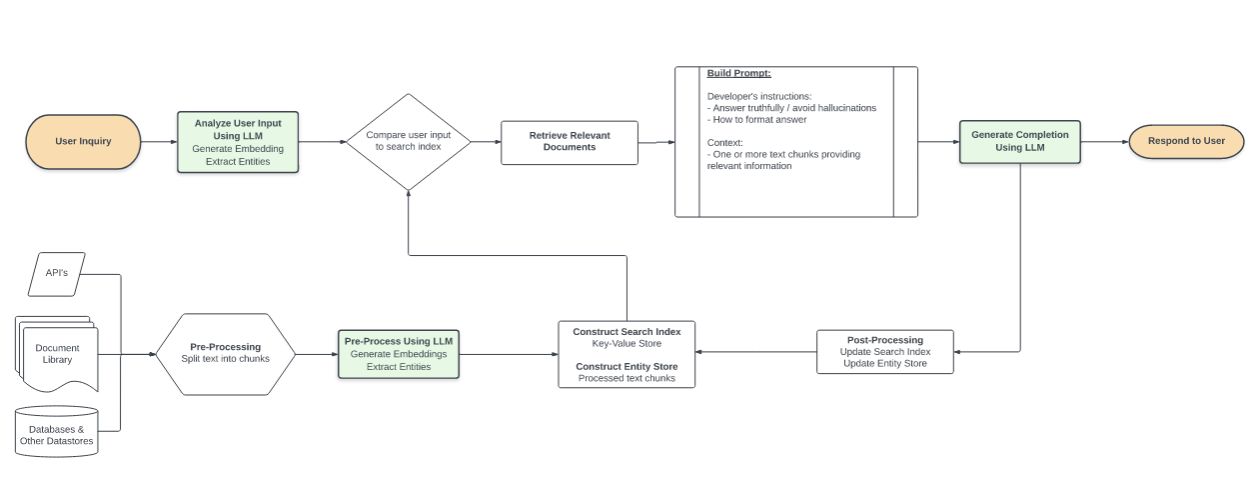
Modern LLM systems rely on retrieval and ranking layers that resemble semantic search. Public research and documentation from Google and OpenAI show that contextual alignment and relevance outweigh keyword repetition.
Clear customer profiling improves:
- precision, by matching your content to users it is actually meant for
- perceived authority, because clarity signals expertise
- trust, through consistent messaging across related pages
- retrieval confidence, making your content easier for LLMs to summarize, cite, or recommend
By contrast, content written for “everyone” weakens these signals. Even high-quality content can be bypassed if the model cannot determine who it serves.
What this means for Small businesses
LLMs are already profiling users automatically. When businesses fail to define their own target market, they give up control over how their content is interpreted. This often results in:
- being surfaced for low-intent or irrelevant queries
- missing high-intent users entirely
- weaker positioning in AI-generated summaries
- reduced visibility despite strong traditional SEO foundations
Clear target market definition allows your website to align with how modern discovery systems actually work, rather than relying on outdated assumptions about search.
What effective LLM-oriented profiling looks like
For LLM visibility, a target market profile should clearly communicate:
- who the user is, including role and experience level
- what decision they are trying to make
- what constraints they operate under, such as budget, compliance, or timelines
- how much depth or technical detail they need
- what success looks like for them
This information should not live in isolation. It must be reflected naturally across page structure, content tone, internal linking, and topic selection. LLMs assess patterns across an entire site, not individual pages in isolation.
What I require from clients under an SEO campaign
Because LLMs evaluate relevance through user profiling, a defined target market profile is now a required input for clients working with me under an active SEO campaign.
This is not about limiting who can find your business. It is about giving search engines and LLM-driven systems the clarity they need to correctly match your content to the right users.
For SEO and LLM visibility, clients are required to document:
- Primary customer type and role in the decision-making context (for example: US-based traveler, local resident, investor, business decision-maker, college student looking for something, parent booking activities, grandparent traveling with family)
- Experience level of the customer within that context (first-time, repeat, sophisticated, professional)
- Geographic relationship to the business (local, regional, international, offshore decision-maker)
- Primary goal or outcome the customer is trying to achieve (experience, performance, compliance, return on investment)
- Lifestyle, activities, or usage scenarios that directly influence intent, expectations, and search behavior
- Key decision drivers such as quality, privacy, price sensitivity, speed, credentials, or expertise
- Constraints that affect decision-making, including regulatory, operational, seasonal, or logistical factors
If a business serves multiple audiences, those audiences must be prioritized. LLMs do not treat all signals equally. They look for dominant patterns.
This information directly influences how pages are structured, how content is written, how internal links are connected, and how authority is reinforced across the site. Without it, content becomes generic, and generic content is far less likely to be surfaced by either traditional search engines or AI-driven discovery systems.
LLMs are not neutral content libraries. They are relevance engines. They infer who the user is first, then surface content that best fits that profile.
In an AI-driven discovery environment, knowing exactly who your content is for is no longer optional. It is the foundation to visibility.